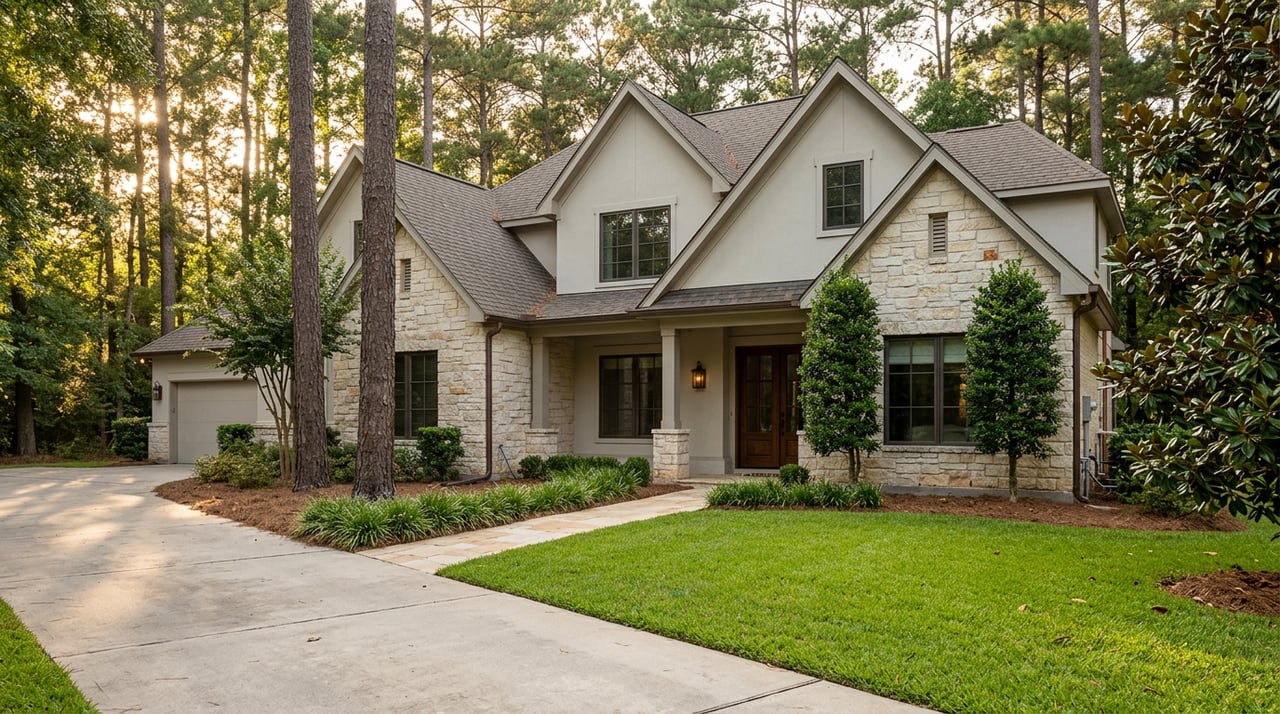
In The Woodlands, Your Covenant File Is Part of the Sale Now
August 13, 2026
August 13, 2026
When a homeowner in The Woodlands removes a live tree without asking first, the Township's Director of Covenant Administration, Kim McKenna, told the board this spring that her department still "move[s] forward with enforcement action," hazard or no hazard. That single sentence, delivered at an April board meeting about a fee schedule most residents will never read, says something larger about this market: in The Woodlands, the paper trail behind your home matters almost as much as the home itself.
That trail got more expensive to ignore on July 1, 2026, when the Township's revised Covenant Administration Department fees took effect. If you're getting a Woodlands home ready to list, the thing most likely to slow you down this year isn't your price or your photos. It's whether your fence, your pool, your repaint job, or that oak you took down two summers ago was ever actually approved.
The Woodlands Township Board of Directors voted 6-0 on May 21, 2026 to approve a revised Covenant Administration Department fee schedule after a set of April public hearings, according to Community Impact's coverage of the meeting. The new structure splits covenant services into two tiers: basic services that still carry no charge, and enhanced services that now do. McKenna told the board the goal was always that starting point, basic review stays free, enhanced review gets priced, but the original 2024 framework, implemented in 2025, hadn't accounted for everything homeowners were actually asking the department to review.
Some of what's now on the books, per that same reporting: a $200 fee for attached-structure permits, a $500 fee for a permit to run a business out of your home, and a new $150-per-tree charge specifically for removing a live tree without covenant approval first. That last one is worth sitting with. It's not a fine bolted onto an existing violation process. It's a defined price the Township now attaches to skipping a step that used to just get you a phone call.
None of this shows up on a listing sheet. It shows up in a title search, a covenant compliance letter, or a buyer's agent asking pointed questions during option period.
Most sellers treat covenant approval as a construction-phase problem: something you dealt with, or didn't, when you built the fence or dug the pool. In The Woodlands, it resurfaces as a transaction-phase problem, because buyers here have learned to ask about it. Questions about whether improvements were properly permitted and whether covenant approval was obtained before work started are now a routine part of due diligence on Woodlands homes, not an edge case.
That pattern makes sense once you understand what the Township can and can't do. The Woodlands isn't an incorporated city, so it can't issue the kind of municipal code violation a buyer might expect from a typical Houston suburb. What it has instead is a civil enforcement system built on the deed restrictions themselves, meaning an unresolved covenant issue doesn't disappear when you sell. It's a property fact, and increasingly, a line item.
Here's the part that catches longtime residents off guard even when they've lived here for years: The Woodlands runs on two separate legal covenant documents, not one, and which one governs your lot depends on your village.
| Governing document | Villages covered |
|---|---|
| Covenants 1 | Panther Creek, Grogan's Mill, Cochran's Crossing, Indian Springs (east of Falconwing Drive) |
| Covenants 2 | Alden Bridge, College Park, Creekside Park, Sterling Ridge, Indian Springs (west of Falconwing Drive) |
The Township's own guide to the revised deed restrictions lays out this split, and it explains why a neighbor's experience is not a reliable guide to your own. Standards, the general design and construction rules, are consistent townwide. But neighborhood-level Criteria can vary from one section to the next and, in most cases, actually override the general Standards when the two conflict. Fence height is the one notable exception, where the townwide Standard controls regardless of what a specific neighborhood's Criteria says. So the assumption that "my neighbor didn't need a permit for that" can be wrong twice over: because they're governed by a different document, or because their neighborhood's Criteria happens to differ from yours on the exact question you're asking.
If you're planning pre-listing work, or trying to figure out whether past work was ever documented, these are the categories that most often trip sellers up:
None of these are unusual restrictions for a master-planned community. What's unusual is how directly they now connect to a closing timeline. A pending or undisclosed covenant issue is the kind of thing that turns a clean option period into a renegotiation, particularly once a buyer's agent starts asking the right questions.
If you're planning to sell in The Woodlands this year, the useful exercise isn't guessing whether something needed a permit. It's pulling your actual covenant file before a buyer's agent does it for you. That means requesting your property's approval history from the Covenant Administration Department, confirming which covenant instrument governs your village, and matching that history against anything visible from the street: the fence, the pool, the repaint, the pergola.
This is exactly the kind of thing a written plan of action is built for, not a mental checklist assembled the week before you list. Knowing which document governs your lot, what's on file, and what isn't gives you time to resolve a gap on your terms instead of a buyer's.
Does my neighborhood's HOA override the Township's covenants? Not usually. Most Woodlands properties are governed by the Township's Covenants and Standards directly, with neighborhood-specific Criteria adding detail on top. Fence height is a specific exception where the general townwide Standard takes precedence over local Criteria.
What happens if I already removed a tree without approval? The Township's stated posture is that hazardous or dead trees get priority consideration, but an unpermitted live tree removal is treated as an enforcement matter, now with a defined $150-per-tree fee attached, per the Township's May 2026 fee update.
Do I need to do anything special with a yard sign when I list? Yes. Township standards limit signage to one real estate sign per single-family lot, and estate or garage sales are prohibited outright, so plan any move-related sale accordingly.
The Woodlands rewards sellers who treat covenant history as part of the transaction, not paperwork to sort out later. If you're weighing a sale and want a clear-eyed look at what your specific property's covenant file actually says, David Gafrick can help you pull that history, figure out what's outstanding, and build a written plan before you list. Let's Connect.
Stay up to date on the latest real estate trends.

Decades of experience in Houston, a commitment to clear communication, and a fiduciary promise to prioritize your goals above all else. My aim is a seamless transaction and a relationship that lasts well beyond closing day.

ADDRESS 8344 SPRING CYPRESS RD STE B, SPRING, TX 77379